


Hill Climb Bike Stunts
3.819.00 Reviews
App Specs
- Version
- 0.1.2
- Updated On
- License
- Free
- Downloads
- 100,000+
- Developer
- oZ Studio
- Categories
- Racing
- Platform
- Android
Screenshots
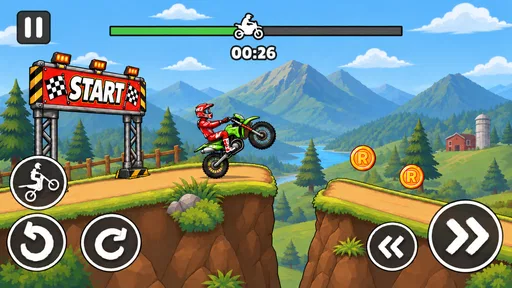
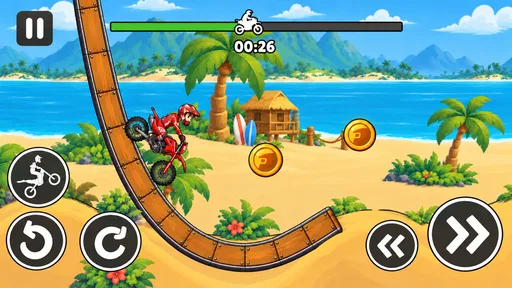
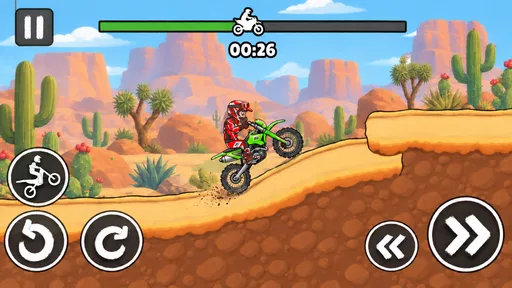
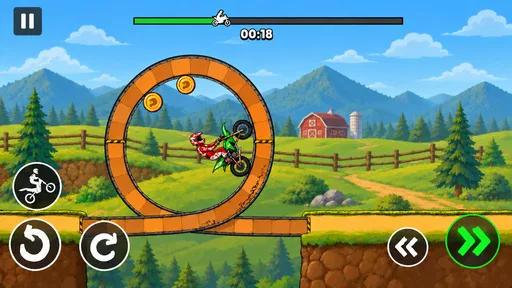
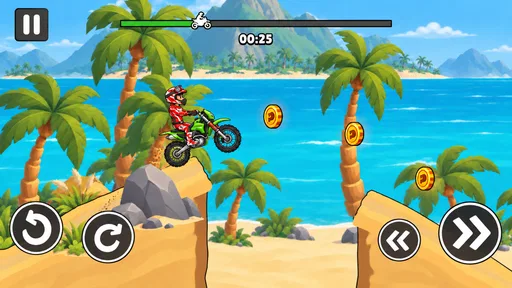
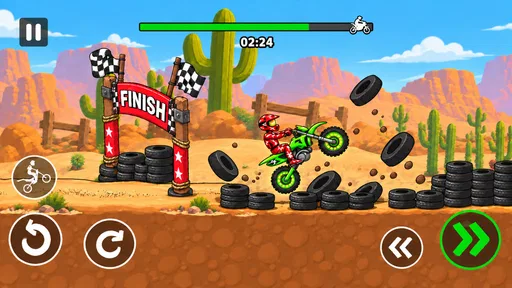
 Analysis by AppCompare
I’d approach Hill Climb Bike Stunts as a focused pick-up-and-play racing game, not a full-scale motorcycle simulator. Its appeal is the tension between moving quickly and staying in control on uneven hill-climb courses: a stunt can look inviting, but a rough landing can turn a promising run into a recovery job. That makes it a better fit for short bursts of play than for someone looking for a deep career, realistic bike handling, or a broad collection of racing modes.
A good fit for small pockets of free time
I’d be most inclined to open it when I have a few minutes to concentrate, such as during a quiet break at home or while waiting for food to arrive. A useful session goal is to handle one troublesome rise more cleanly, rather than expecting every attempt to end in a perfect run. That keeps the focus on a specific skill and makes it easier to stop without feeling that I need to finish a long sequence first.
It is not the game I’d choose if I’m likely to be interrupted every few seconds. A call, a message, or an unexpected change of plans can arrive at exactly the wrong moment when I need to react to a jump or landing. For those situations, a turn-based game or something that can be paused without consequence is a safer companion.
How the hill-climb format feels in practice
I find the hill-climb format most interesting when I treat each rise as a small handling puzzle rather than a cue to accelerate without thinking. This section looks at how pace, balance, and stunt decisions shape a run, including why a controlled landing can matter more than a showy jump. That trade-off also sets up what repeated attempts are likely to feel like.
Speed is only useful when you can keep the bike steady
In this kind of bike-stunt racing, speed is not simply a matter of holding acceleration. The track’s changing slopes make balance part of the challenge, so I would treat each crest as a decision point: carry enough pace to clear it, but avoid pushing so hard that the landing spoils the rest of the run. That push-and-correct rhythm is the main reason a hill-climb game can feel more involving than a straightforward race down a flat road.
The title’s emphasis on stunts suggests a deliberately exaggerated arcade mood rather than strict real-world riding. That is useful if you want visible jumps and quick attempts, but it is also a reason not to expect the careful physical detail of a simulation. I would judge success by whether the controls let me make understandable corrections, not by whether the bike behaves exactly like a real machine.
A practical tip is to make your first few attempts about learning the shape of the terrain, rather than chasing the fastest possible run. Notice where the bike tends to pitch forward, where a jump gives you room to adjust, and which landings leave little margin. Once you have a feel for those transitions, adding speed becomes a deliberate choice instead of guesswork. This approach is especially helpful when a course punishes a small mistake with a long reset.
Worth Reading Before You Choose

Flipboard Shows What News Apps Must Do Beyond the Feed

Switching to Android Auto Means Rethinking Your Driving Routine

Google Calendar Makes a Crowded Week Easier to Manage

Ludo King Makes the Most of the Minutes Between Plans

Baby Panda World Brings Quick Play to Modern Phones, but Its Game Library Feels Busy

ESPN’s Live Game View Makes Following Close Games Easier
Stunts add risk as well as spectacle
The promise of stunt riding is easy to mistake for a reason to perform a trick at every opportunity. I would resist that impulse. In a hill-climb race, a stunt is only worthwhile if the bike can come down in a position that keeps the run alive. A flashy moment that costs your momentum or leaves you fighting to recover may be less useful than a controlled jump.
That creates a satisfying little trade-off: play cautiously and you may miss the thrill of the game’s stunt focus; play recklessly and you can spend more time correcting than racing. If you enjoy improving through repeated attempts, this balance can make retries feel purposeful. If you mainly want instant, uninterrupted speed, the need to manage landings may feel like friction rather than depth.
When a quick session makes sense
I can see this working well during a short break, while waiting for an appointment, or when I want a game that does not demand a long stretch of attention. A useful way to play is to set a small personal goal for a session: complete a tricky section cleanly, keep the bike upright through a difficult crest, or improve one part of a run. That gives each attempt a point without turning casual play into a grind.
It is less suited to a commute or another situation where you have to stop at unpredictable moments. A run can be interrupted just as you are handling a jump, and the enjoyment depends on being able to react. I would also skip it when I want relaxed, hands-off entertainment; the central appeal is active correction, not watching a race unfold by itself.
What to expect from repeated play
Repeated play is where I would judge whether the game’s challenge feels rewarding or merely repetitive. I focus here on reading mistakes, managing demanding moments, and checking whether the bike responds consistently enough for practice to pay off. Those details lead naturally into the practical question of how well the game suits different devices and expectations.
Busy moments test patience more than raw reflexes
The most demanding moments are likely to be the transitions between climbing, becoming airborne, and landing. Those are the points where a small correction can matter more than frantic input. I would avoid holding a control continuously just because the bike is moving slowly uphill: if the next slope changes the bike’s angle, a late adjustment may create a worse landing than a measured approach.
For a more reliable attempt, focus on one obstacle at a time. If a run goes wrong, try to identify whether the trouble began on the approach, in the air, or at touchdown. Changing only that part on the next try makes the game easier to read and helps avoid repeating the same mistake without understanding it. This is a simple but useful way to turn failure into practice rather than frustration.
Recovery is part of the appeal, but it can also be the weak point for players who dislike repetition. If a crash forces you to redo a section, the result may feel fair when you can see what went wrong and adjust; it feels tedious when you are repeating ground you have already mastered. I would give the game a few attempts before deciding whether its restart rhythm works for you. The key question is whether each retry teaches you something about the course or merely asks for the same effort again.
Reliability and the limits of what I would assume
Hill Climb Bike Stunts is a racing game from oZ Studio, and its current version is 0.1.2. That version detail matters to my expectations: I would approach it as a relatively early-stage release, keeping in mind that polish and consistency can change as the game develops. I would not assume that every run will feel perfectly tuned, or that the handling will suit every player immediately.
For reliability, I would pay attention to whether the bike responds consistently to the same sort of correction across several attempts. If it does, the challenge is easier to learn even when the course is demanding. If the response feels unpredictable on your device, try a shorter session and check whether the problem repeats before deciding that the game is a poor fit. I would avoid building a strategy around a single unusually smooth or difficult run.
The game has an average rating of 3.8 from over 500 ratings, with 19 written reviews. I read that as a mixed but not dismissive reception: there is enough interest to make trying a free racing game reasonable, while the rating is not a guarantee that its handling or pacing will click for everyone. The game has more than 100,000 installs, which shows that it has found an audience, but popularity alone does not tell me whether its particular style will suit your taste.
Device fit, cost, and what the numbers mean
The listed minimum operating-system requirement is 7.1, and the content rating is Everyone. Those details make the game broadly accessible in terms of age rating and software eligibility, but they do not tell me how it will perform on every phone or tablet. I would be cautious about assuming that an older device will feel smooth simply because it meets the minimum requirement; responsiveness matters in a game where timing a correction is part of the challenge.
If you are trying it on a device that already struggles with games, begin with a brief session and see whether steering remains responsive during jumps and landings. That is more useful than judging performance from a quiet menu or a simple stretch of track. I would also avoid multitasking heavily while playing if your device tends to slow down under load, since a delayed input can be especially frustrating when the bike is airborne.
The game is free to start, with in-app purchases ranging from $1.99 to $4.99 per item. I would try the core experience before spending anything. First check whether you enjoy the pace, whether restarting feels tolerable, and whether the controls make sense to you. A purchase is easier to judge after those basics have earned your interest, rather than as a way to solve a problem you may not yet understand.
Where it sits among racing alternatives
Compared with a conventional circuit racer, this game’s hill-climb and stunt focus puts more attention on the bike’s attitude over uneven ground than on taking a clean line through repeated corners. That makes it a better choice when you want short, obstacle-led runs and a reason to manage jumps. If you prefer close competition on familiar tracks, structured championships, or a stronger sense of realistic motorcycle control, a more traditional racing game is likely to be more satisfying.
It also differs from casual endless racers, where the main task is often to stay moving and react to obstacles as they arrive. Here, the hill-climb framing makes each rise and landing feel like a small handling problem. That distinction matters: someone who likes learning how to approach a particular obstacle may enjoy the repeated attempts, while someone who wants a constant stream of effortless progress may find the same structure repetitive.
Who I would recommend it to
I would recommend giving it a try if you enjoy arcade racing, have patience for trial and error, and find it satisfying to improve a run through better timing. It may also suit players who want a free game they can sample without committing to a lengthy campaign. The strongest reason to keep playing is not just the stunt theme; it is the chance to learn how to carry momentum across changing terrain without losing control.
I would skip it if you expect a polished simulation, a large range of modes, or a guaranteed smooth experience on older hardware. I would also look elsewhere if repeated retries quickly annoy you, or if you prefer racing where speed matters more than balance and recovery. The game’s basic premise is clear, but whether it works depends heavily on enjoying that particular mix of pace and control.
My verdict on pace and performance
For me, Hill Climb Bike Stunts sounds most appealing as a compact arcade challenge: a free bike racer from oZ Studio where the interesting choice is how much speed to risk on a rough climb. Its Everyone rating broadens who can try it, and the current release is version 0.1.2. I would start with cautious runs, learn which moments upset the bike’s balance, and only then push harder for more dramatic stunts.
My overall recommendation is measured rather than universal. Try it if you want short hill-climb sessions and enjoy earning cleaner runs through practice. Keep your expectations modest about polish, and test responsiveness on your own device before settling in for a long session. If those caveats sound acceptable, the game offers a specific kind of racing tension that a flat-track racer may not provide; if you want dependable simulation or frictionless speed, another option will suit you better.
Pros
- Simple controls make it easy to start playing.
- Short stunt runs suit quick gaming sessions.
- Bike-based challenges offer a change from car-focused racing games.
- Performing tricks adds variety to straightforward hill driving.
- Playable offline
- so no connection is needed for basic gameplay.
Cons
- Bike balance can feel tricky until you learn the controls.
- Repeated tracks may make longer sessions feel monotonous.
- Frequent crashes can interrupt progress through a run.
- Ads may appear between attempts or during play.
- Some bikes or upgrades may require substantial in-game grinding.
FAQs for Hill Climb Bike Stunts
What is Hill Climb Bike Stunts?
Hill Climb Bike Stunts is a motorcycle game focused on riding across uneven, obstacle-filled terrain. Players steer a bike over hills, ramps, and other tricky sections, aiming to stay balanced and reach the end of each course. The core appeal is its simple, stunt-oriented gameplay, though the exact modes, bike selection, and progression can vary by version.
How do you play Hill Climb Bike Stunts?
The controls typically let you accelerate, brake, and tilt the motorcycle to manage its position in the air and on the ground. Careful timing matters: going too fast can send the rider tumbling, while cautious acceleration may help on steep climbs. If the game offers multiple control layouts, try them early to find one that feels comfortable on your device.
Is Hill Climb Bike Stunts free to download and play?
Availability and pricing can depend on the app store and the specific version you find. Some games in this category are free to install but include advertising or optional in-app purchases, such as items or progression aids. Check the store listing for the current price, purchase details, and any advertising disclosures before downloading, since these can change over time.
Can I play Hill Climb Bike Stunts offline?
Whether the game works without an internet connection depends on its current version and how its features are implemented. Basic riding may be available offline in some releases, while ads, online rewards, leaderboards, or other connected features may require internet access. Check the developer’s store description and test connectivity requirements before relying on the game during travel or offline periods.
Is Hill Climb Bike Stunts suitable for children, and what should I check before installing it?
The stunt-riding theme may appeal to younger players, but suitability depends on the game’s content, advertising, and purchase options. Before installing, review the age rating, privacy information, permissions, and in-app purchase details on the official store page. Parents may also want to use device-level purchase controls and check whether the game displays third-party ads.


